Thursday, February 24, 2011

Girl, you better ROCK that NL Hair! NL Styles: A Video Series


For most of my hair journey, I've been Neck Length.. While this length is typically seen as a stepping stone to get to that luxurious Waist Length hair many women crave, we've also got to embrace it for what it is! Unfortunately, many NL women are faced with a dilemma on their wash day----"What in the WORLD am I going to do with this hair after I wash it??". Women of all hair lengths, I'm sure, have this same issue every wash day, however, NL can sometimes be that weird "in-between" stage that many can find frustrating when it comes to styling.

No, you don't have to look a hot mess, just because your hair is shorter than you'd like.

No, you don't NEED a flat iron or blow dryer to make your hair look good.

Yes, you CAN roller-set it!

Yes, you CAN flexi-rod it!

Yes, you CAN find cute accessories and modify styles to fit your length of hair.

and YES YOU SHOULD ROCK THAT NECK LENGTH HAIR!

For all of you NL ladies who are confused as to what to do to your hair in terms of styling, I'll be adding some videos or picture tutorials on cute hair styles that I hope you'll love as much as I do!

I present to you... NL Styles: A Series

Consider this Volume 1! :)

Sunday, January 2, 2011

No Daily Moisturizer?? Penetrating Oils?? Say it ain't so!


WARNING: THIS POST CONTAINS A LOT OF INFORMATION, AS WELL AS SOME INFORMATION THAT MAY GO AGAINST WHAT WE KNOW AS BLACK HAIRCARE 101..PROCEED WITH CAUTION. (Also proceed with popcorn, because this is a long one.)


Now...for this blog I was preparing to get all science-y and technical. But I've decided to make it less of a science lesson and more of Kimora speaking, providing you with my personal experiences, my opinion, the experiences of others, and a little bit of info from those articles I read.

Moisturizing. It seems like a simple enough concept. All hair websites I've visited, and black hair books I've read, have advised us to moisturize our hair with a water-based moisturizer. Some sites even advise us to seal in this moisture by way of an oil.

Ideally, healthy hair is supposed to have its own internal moisture/water content, which is then protected and waterproofed by an oily waxy substance that is secreted from our sebaceous glands, called sebum.

In my opinion, this should be the model of moisturizing and sealing. I call it Nature's M&S. What I mean by this is that we shouldn't have such a difficult time finding a moisturizer that works for us. We shouldn't have to clean out Aisle 11 in Walgreen's to find out which commercial moisturizer will best suit us. While nature may have the best formula for moisturizing and sealing, most times, African American/Black hair does not have sebum running freely to the ends, so we must supplement that with products and techniques.

Hair's Water Content

Hair has several different components, but the one that is pertinent to this blog is water content. Most people have hair that contains 8% to 12% water---which is the ideal range. Anything below that is considered dry hair, and as we know, is more prone to breakage. Chemical treatments such as relaxers can bring the moisture content to as low as 2%. Yowza!!
According to a Hair-Dressing.com article:

"Water content is important in the chemical composition of hair. It promotes normal and healthy hair growth. The weight of the hair is 1.37 in accordance with metric measurements, but when it is impregnated with water the weight increases by 12-18%. The process of water absorption is very rapid, about 75% of the maximum of water that hair can take up is absorbed within 4 minutes of exposure of the hair to water...The absorption of water gives the hair its required moisture content which is essential for healthy hair appearance"

So from this, we know that maintaining a certain percentage of water in the hair is very important, but how do we do that?

We already know (well most of us do anyway) how to properly infuse moisture into our hair via our regimens. Look for shampoos and conditioners that contain humectants, use conditioners that contain proteins, deep condition, in the wintertime use your humidifier to keep your home's moisture levels in check, reduce direct heat and heat styling. If possible, wash your hair about every 3 days. Once you do all of these things, it is highly unlikely that a commercial moisturizer must be used daily to restore moisture in your hair. If you are experiencing dry hair soon after a moisturizing treatment or washing your hair, you may have a Porosity issue, and in order to maintain an ideal moisture content in your hair, this must first be addressed.

I know, personally, after a good wash (sulfate-free), and Deep Conditioning, I don't moisturize my hair. I use an oil or oil mixture to seal in the moisture that's already there. If I do feel my hair getting a bit dry, I give it a light mist of water, then apply the oils. This usually holds me over until my next wash day.

Using Oils Daily in Place of Daily Moisturizer

This was the main point of me writing this blog. I have been experimenting lately with using only oils to nourish my hair. I came to this realization that since our natural Sebum is a sort of waxy/oily substance, I should be using products similar to it to nourish my hair and protect the moisture that's already in there. So far, I have had far greater results with my oils than when using my commercial moisturizers. I know you're probably thinking, "Kimora, oils don't moisturize or penetrate".. and you would be partly correct.

In a 2005 study published in the International Journal of Cosmetic Science, entitled Investigation of Penetration Abilities of Various Oils into Human Hair Fibers , it was concluded that

"With coconut, olive, and sunflower oils the capillary adhesion was found to decrease with time, but not with mineral oil. Application of heat reduced the capillary adhesion further for coconut and sunflower oils. Again, this was not observed with mineral oil. Based on an earlier study, where coconut oil was found to penetrate hair while mineral oil was unable to do so, it was hypothesized that the reduction in capillary adhesion resulted from the penetration of oil into the fiber, leaving a thinner oil film on the surface."

To paraphrase this quote, and summarize the study: Various oils were applied to strands of hair. After 24 hours, there was less coconut oil, sunflower oil, and olive oil on the surface of the hairs. Contrarily, and as one would expect, this did not apply to mineral oil: The amount of mineral oil applied on the hair stayed the same after 24 hours. When heat was added to the equation, even less coconut, olive, and sunflower oil was observed on the surface of the hairs. And still, mineral oil remained the same. So yes, some oils do penetrate the hair shaft, namely Olive, Coconut, and Sunflower to name a few. Other oils were tested, but those three that were mentioned had the highest absorption rates, especially with the application of heat.


On a less formal note, in one of my Hairlista discussions, several women were asked of their experiences with using oils in place of a daily moisturizer. 13 reported using oils only. Of those 13 women, 12 reported using at least one of these penetrating oils with good results. 1 reported spraying her hair with water before applying these oils.

For the past few weeks, I have been using oils on my hair on a daily basis. Namely, a mix of Coconut Oil, Olive Oil, and Jojoba Oil. My hair feels very soft, manageable, and has had less tangles. So far this has been working for me. I am continually working on ways to streamline and simplify my hair regimen that will benefit my hair as well as my wallet.


In Conclusion

I know this was a lot of info to digest at one time, but I hope you were able to stick through it and learn something in the process. I'm not here to convince you to buy stock in Coconut Oil. I'm just bringing a different perspective to your door and letting you ladies know that it's OK to think outside the box and do what works for your hair. I'm also encouraging you ladies to do your own research if you are unsure what a certain product may do for your hair. Also, if you are experiencing wonderful results from what you're already doing, there's always the saying: If it ain't broke, don't fix it!

Have any of you tried skipping the daily water-based moisturizer, and applying oils only? Please feel free to comment!

Happy Hair Growing!

Monday, November 29, 2010

Winterizing My Regimen


I've been experiencing more breakage than usual so I've realized I'm going to have to treat my hair differently in the Winter to maximize growth, and reduce the breakage! Here's what it's looking like so far:


  1. Continue Hairline Bootcamp to grow out broken edges (See previous blog)
  2. Moisturize hair at least once daily. Moisturize hairline 2x daily
  3. When sealing, use a mixture of Jojoba & Castor Oil. Since Castor Oil is thicker, I find it a bit more protective and effective at sealing in the moisture.
  4. As much as I tend to avoid "Protective Styles", use them 90% of the time to curb unnecessary breakage from friction.
  5. When wearing hats, use scarf or satin bonnet under.
  6. Continue to do weekly light protein, and a hard protein every 4 to 6 weeks
  7. Deep Condition hair weekly w/ my DC + EVCO. Use w/ heat (either steam or traditional heat)
  8. Use my humidifier to keep indoor moisture levels in check
  9. And of course...continue to avoid direct heat (especially in the winter since it dries out my hair so drastically)
This is looking like a solid winter reggie... now time to put it in effect!

Thursday, November 11, 2010

Hairline Bootcamp


A hair journey wouldn't be a journey without at least one setback, right? Well the setback of the moment is my hairline... no, not the thinning of my hairline, but the breakage of my hairline. It looks like I have a halo of short hairs around the perimeter of my hairline. I know it's breakage, because the hair directly behind this "halo" is at least double the length of the broken hairs.

So...with that said, I'm sending myself to Hairline Bootcamp. No playin' around here ladies and gentlemen. This is serious hair business. This isn't for the faint of heart, the heat-freaks, the brush-a-holics, or the wrappers. Feel free to sign up to Hairline Bootcamp at anytime you deem it necessary. Here are the guidelines.


  • NO brushing, only use wide toothed comb. Smooth edges with fingers
  • Tie scarf on forehead, not on hairline or nape. Scarf must be just snug enough to stay on at night.
  • If roller-setting (or any other type of set), leave hairline out.
  • Rollerset (or any other type of set) sparingly. No unnecessary tugging, pulling, small-tooth-combing.
  • Moisturize hairline and nape 2 x daily
  • Apply Castor Oil to hairline at least 3 x a week.
  • Relax every 12+ weeks, leaving nape and hairline for last, about a minute or 2 before rinsing out relaxer.
  • Coat hairline with conditioner and vaseline to deliberately underprocess
  • Don't even look at a flat iron. Kidding. Use heat very sparingly, but once again. leave hairline out of it.
Bootcamp will last 6 weeks, until Dec. 27. We'll assess the progress and go from there. Stay strong out there.

Keep it simple, stupid!


“It seems that perfection is reached not when there is nothing left to add, but when there is nothing left to take away”.
-Antoine de Saint Exupéry

"Everything should be made as simple as possible, but no simpler."
-Albert Einstein

"Simplicity is the ultimate sophistication."
-Leonardo Da Vinci

All too often I hear people complaining of breakage, dryness, not-so-great results, or no results at all. And when they divulge all the details of their regimen...well let's just say it looks a little more like the NFL roster than a hair care regimen.

For example... let's say you have an oil/grease stain on your favorite shirt. You buy 20 stain removers and apply all of them at the same time...and not only does the stain NOT come out, it seems to have gotten bigger! How do you know which stain remover was the culprit? Would you have known that one of those stain removers, if used alone, would have gotten rid of the stain? If you would have...(wait for it) kept it simple, stupid, you would have been able to wear your shirt out to that party on Friday.

There's no need to do pre-poos, co-washes, henna, cholesterol, protein, indigo, black tea rinses, beer rinses, coffee rinses, garlic treatments, biotin, Megatek, and ACV rinses all at the same time. Start off simple with the essentials.

There's nothing wrong with finding different techniques and methods. But take your time, let your hair tell you how it feels about your current regimen before you go nuts at Sally Beauty Supply.


How do you guys feel about the K.I.S.S. mentality in terms of a hair care regimen? Would you consider your regimen simple?

Sunday, November 7, 2010

Protein...Moisture..Wet Assessments.. OH MY!


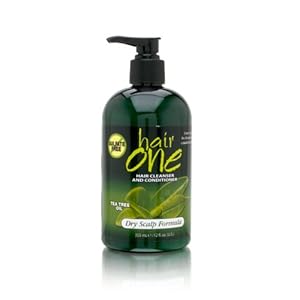
As I sit here with my Hair One sulfate-free cleanser marinating on my strands, thinking about the protein treatment I'm going to be doing later, I realize I need to share something with you guys (ladies). I remember when I knew nothing about hair, and I thought that washing your hair, putting on some conditioner for 2 minutes, and greasing my scalp with globs of DAX was all I needed. While black haircare doesn't need to be complicated, it's not exactly that cut and dry either. Especially when you are relaxed. One of the biggest contributing factors of breakage in relaxed hair is an imbalance of protein and moisture. You're probably saying "Protein??". Yes, protein. No, not like the protein shake mix you buy at GNC, this type is for your hair. Grab the popcorn and a drink, this one will be a bit lengthy.

Relaxers, Moisture & Protein
When we relax, we actually break the protein bonds in our hair and sort of rearrange them by smoothing it out with a comb or our fingers. Of course it's not that simple, but that's the general gist of a relaxer process. Now that the protein bond has been broken, that leaves our hair a bit weaker than how it was in its original state. We have got to put the protein back to re-strengthen our hair. The role of moisture here is quite obvious. If your hair isn't moisturized, that means it is dry, and what does dry hair do? You got it. Without moisture, your next stop is Breakage City.

Moisture= Elasticity and flexibility
Protein = Strength and structure.

Too much protein = dry, hard, crispy hair
Too much moisture = mushy hair, very stretchy, no structure and cannot hold on to a style (curls, etc)

Lets begin by talking about protein. There are two types of protein treatments:
  • Heavy protein
  • Light protein
Heavy Protein: You apply this treatment following a wash, and it should be used about every 6 weeks. It MUST be followed by a Deep Conditioning, as these protein treatments make your hair very hard and brittle. If you don't follow with a moisturizing treatment, you WILL experience breakage...remember, relaxed hair needs a BALANCE of protein and moisture.
Light Protein: This protein treatment is usually in the form of a conditioner, and may provide a moisturizing effect as well. It is used following a wash. It's not as strong as the heavy protein and can be used on a once weekly basis. Some choose to follow this up with a moisturizing conditioner, I, on the other hand, do not. This is what works for my hair.
Mid-Relaxer Protein: This one is new to me. I've only done it once but I like what it does for me. You apply your light protein after you rinse out the relaxer from your hair, but BEFORE you neutralize. Why does this work so well? Basically, your hair cuticles are very open after applying a relaxer. This makes the hair more susceptible to accepting protein at this time. You let the light protein sit on your hair for about 5 minutes, rinse, then apply your neutralizing shampoo to complete your relaxer process. You'll find more information about it here, as well as more detail regarding how to properly self-relax your hair.

Moisture

Naturally, African-American/Black hair is drier than most, because of its distinct curl pattern. The curlier, tighter, and kinkier the hair, the dryer it will be---generally speaking. This is because our natural oils (sebum) have a more difficult time making its way down the shaft in this curl pattern. And I know I always struggled with dry hair, and many other black women who still do. How do we apply moisture to black hair? Several ways.
  • Deep Conditioning
  • Using a water-based moisturizer
  • Leave-in conditioners
Deep Conditioning: Conditioning using indirect heat such as a hooded dryer, or conditioning cap. With heat, usually 30 minutes, without heat, an hour or so.
Water-based moisturizer: This keeps your hair moisturized on a daily basis in between washes. The first ingredient is always water. Most ladies apply it daily, some every other day. This is usually followed by "sealing" the moisture in with an oil.
Leave-in conditioners: We apply these after our final rinse, and it keeps some moisture in our hair. Like a conditioner, just lighter.

What happens if this delicate balance is out of whack? Breakage! And we all know how infuriating that B word can be. How do you know which you need? I stay on a schedule:
  • Hard Protein (Aphogee 2 step protein treatment) every 6 weeks,
  • Light Protein once a week (Aphogee keratin 2 minute reconstructor).
  • Moisturize every day with Garnier Fructis sleek & shine , seal with jojoba oil
  • Deep Condition about once a week.
How to tell whether you need protein or moisture in your regimen

There's several websites that offer suggestions for strand tests and wet assessments. Click here for a pretty good article I found on wet assessments.

It took me a while to really get to know when my hair needed more moisture or more protein. But now that I have my regimen down, and I know my hair pretty well, I can tell when I'm lacking one or the other. I can't even begin to emphasize how important this is when it comes to retaining length in relaxed hair. Anywho, thats all for now. Happy Hair Growing!

Sulfates and Your Hair


In the haircare world, there's lots of terminology, no-no's, and fads flying around. One of the highly discussed terms we hear about is "Sulfates". I'm sure if you lurk on sites like Long Hair Care Forum or Hairlista you have come across this term. Let's delve a little more into this.

What are sulfates?
Sulfates are basically surfactants, the substances that decrease the surface tension of the water so that it spreads out more easily. The reason your shampoo lathers is mainly due to the sulfates in it. Because the sulfates in shampoos are so strong, they are excellent in removing dirt and grime. They allow the water stick to dirt and grime so that they can be removed from hair and scalp.

The most commonly used sulfates are Ammonium Lauren Sulfate, Sodium Laureth Sulfate, and Sodium Laurel Sulfate (commonly known in the hair world as simply SLS)

Are they good or bad for your hair?

It's pretty much a known fact that sulfates aren't very good for your hair, or your body in general. Shampoo and other beauty product companies still continue using them regardless of their bad reputation. Why? Simple. They're cheap to make and that rich lather is very hard to imitate with other "healthier" options.

Besides shampoo, what other products use these sulfates?
Unless otherwise stated, you'll find sulfates in: toothpaste, dish washing liquid, soaps, laundry detergent, carpet cleaner, body wash, shaving cream, bubble bath, stain remover.

So...what's your opinion on sulfates?
I'm not necessarily against sulfates as a whole. I haven't seen or felt any adverse effects by using body washes, dish washing liquid, soaps, or laundry detergent. I have, however, tried a sulfate-free toothpaste and while it was hard to get used to not having bubbles, I kinda liked it.

Yeah, yeah yeah, but this is a hair blog.. How do you feel about sulfates for your hair?
I didn't have a problem with sulfate shampoos---that is until I started using SULFATE FREE shampoos. I always suffered from dry scalp and wondered why. I started hearing things about sulfate-free shampoos, and sulfates causing scalp irritation. So I said, what the heck, let me try this out. I did it.. and dandruff/dry scalp has become a thing of the past! My scalp is well moisturized, my hair is soft and is well moisturized...it's a win win situation. I tried going back to using sulfates to see if the sulfates really were the culprit causing my dry scalp. LOW AND BEHOLD, MY DANDRUFF CAME BACK! So now, I know the deal. I'm a sulfate-free girl, except for my clarifying or relaxer days.

Spill the beans. What sulfate-free shampoo do you use?


Final word
Ladies (and gentlemen), it's not about whether or not I use sulfates. It's not about me bashing sulfates or those that use them. I just believe we have to arm ourselves with information on the things we choose to buy/use. Ignorance is bliss only for the ignorant. There are thousands upon thousands of products that stare you in the face every time you go into a beauty supply, Walmart, or pharmacy. Before you reach into your pocket to spend your hard earned money, know what you're buying and know what works for you.